

Quick answer
Swimming at Moreton Island is generally safe year-round at protected beaches on the western shore, where calm bay waters and patrolled zones provide low-risk conditions. The eastern ocean beaches present stronger currents and waves suitable for experienced swimmers only. Seasonal marine stingers appear between November and May, requiring protective clothing, while the May-to-October period offers the clearest conditions with minimal hazards and water temperatures between 19-24°C.
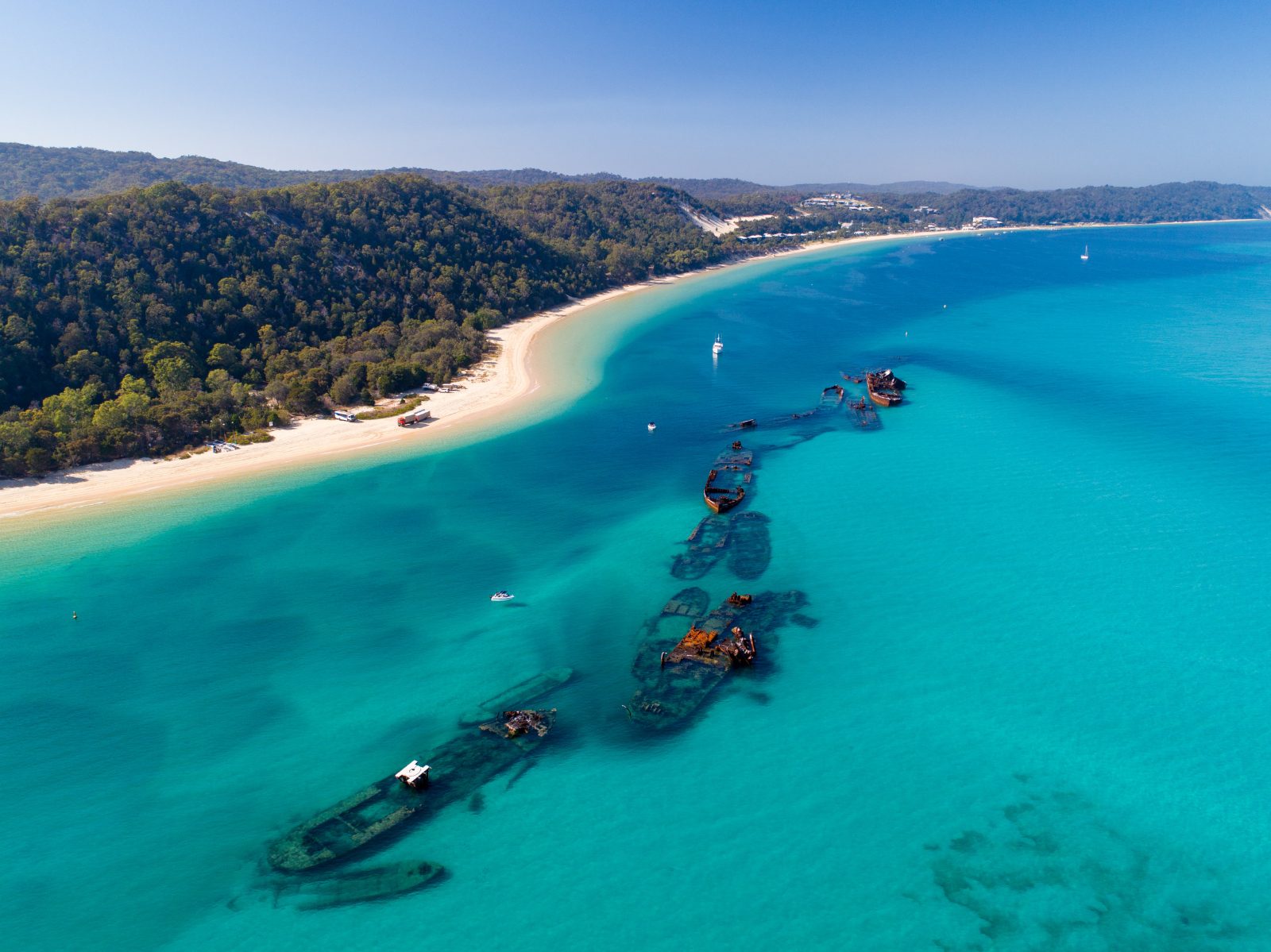
Moreton Island sits as the third-largest sand island on Earth, yet fewer than 2% of its annual visitors understand that its eastern and western shorelines operate as entirely different swimming environments. The western beaches face Moreton Bay's sheltered waters, where the continental shelf creates a natural barrier against ocean swells and the shallow gradient allows wading 50 meters offshore before reaching chest depth. The eastern beaches meet the Coral Sea directly, where the Pacific swell generates surf breaks and rip currents that claim unprepared swimmers each season. Marine life defines much of the island's swimming calendar. Box jellyfish and Irukandji stingers migrate into Moreton Bay's warmer months, with confirmed sightings documented from late October through early June. Stinger nets do not exist on the island—visitors during this window wear full-body lycra suits as standard practice. The cooler months eliminate the stinger risk entirely while maintaining water clarity that routinely exceeds 10 meters visibility at northern beaches. Dugongs and green turtles feed in the seagrass meadows year-round, particularly off Tangalooma and Bulwer, but pose no threat to swimmers who maintain respectful distance. Is it safe to swim at Moreton Island depends heavily on choosing beaches matched to your skill level. The Tangalooma Wrecks anchorage provides the island's most protected swimming zone, where 15 deliberately sunk vessels break wave action and create a lagoon-like pocket. Bulwer Beach and Cowan Cowan on the northwest tip offer patrolled zones during peak season, with flags marking safe swimming channels away from boat traffic. First-time island visitors should avoid the surf beaches entirely—North Point and Middle Road beaches generate undertows strong enough to pull confident swimmers 200 meters offshore during spring tides. The island's lack of permanent lifeguard stations outside holiday periods places responsibility entirely on individual judgment. Mobile phone coverage exists only within 2 kilometers of the three settlements, meaning offshore emergencies require satellite communication or reliance on passing vessels. Most incidents occur when visitors treat ocean beaches with the same casual approach appropriate for bay-side locations, unaware that the eastern shore's conditions shift dramatically within a single tidal cycle.
“The western beaches face Moreton Bay's sheltered waters, where the continental shelf creates a natural barrier against ocean swells and the shallow gradient allows wading 50 meters offshore before reaching chest depth.”
Is It Safe to Swim at Moreton Island? Best Times for Safer Conditions
The safest window for swimming at Moreton Island is the best arrival window of 09:00–11:00. Arriving during this period allows swimmers to experience calmer conditions and clearer water before afternoon winds and tidal shifts affect visibility and current strength.
Summer (Dec–Feb)
High; busy beaches24°C to 29°C; frequent afternoon storms
High temperatures increase UV exposure and wind; swim early to avoid afternoon chop.
Winter (Jun–Aug)
Moderate; quieter shoreline15°C to 22°C; stable, drier conditions
Cooler air temperatures; water remains swimmable with calm, clear conditions for most of the day.
Shoulder Months (Apr, Oct)
Low to moderate18°C to 26°C; mild breezes
Consistent weather patterns provide balanced conditions for extended water activity throughout the day.
Verdict: For the most stable swimming conditions, aim to arrive between 09:00–11:00 during the shoulder months of April or October.
Is It Safe to Swim at Moreton Island? Rules and Safety Practices to Follow
Swimming at Moreton Island requires attention to ocean conditions and marine life. Following these safety practices reduces risk and helps protect the island's environment.
Do
- Swim between flags at patrolled beaches like Main Beach
- Check current conditions with rangers at Bulwer or Tangalooma
- Wear protective clothing during stinger season (November to May)
- Swim with a buddy in unpatrolled areas
- Stay close to shore if you're unfamiliar with ocean swimming
- Watch for rip currents on ocean-facing beaches and swim parallel if caught
Don't
- Don't swim alone in remote or unpatrolled locations
- Don't enter the water during rough conditions or strong winds
- Don't ignore warning signs or ranger advice about hazards
- Don't swim at dusk or dawn when marine life is more active
- Don't assume calm bay water means no currents or hazards
How to Get to Moreton Island Safely for Swimming
Moreton Island is located off the coast of Brisbane and is accessible primarily by passenger ferry or vehicle barge. Planning your transit is essential given the island's remote nature and limited emergency service accessibility.
MICAT Ferry from Port of Brisbane to Moreton Island
Vehicle barge transport (requires 4WD)
Is It Safe to Swim at Moreton Island? Facts About Its Waters and Beaches
Moreton Island presents diverse coastal environments, ranging from sheltered bay waters to exposed ocean surf. Understanding the distinct geography of these beaches is essential for planning safe water activities.
15 shipwrecks at Tangalooma
The Tangalooma Wrecks comprise 15 intentionally sunk vessels that create a sheltered, shallow snorkeling environment. These ships form an artificial reef protected from open ocean swells.
Western bay beaches
The western side of Moreton Island faces Moreton Bay and generally features calmer water conditions suitable for swimming. This area is shielded from the direct energy of the Pacific Ocean by the island mass.
Eastern beach characteristics
The eastern side of the island faces the open Pacific Ocean and is characterized by powerful waves and strong currents. This coastline is largely unsuited for recreational swimming due to unpredictable surf conditions.
Lack of lifeguard patrols
Most beaches on Moreton Island do not have permanent lifeguard patrols. Visitors must assess their own swimming ability and local conditions before entering the water.
Natural sand island formation
Moreton Island is the third-largest sand island in the world and lacks natural rock reefs. Most underwater formations are created by submerged artificial structures or natural sandbar shifts.
Clear water visibility
The shallow, sandy nature of the western bay waters often results in high water clarity during favorable conditions. This visibility is most consistent during the recommended arrival window when water movement is minimized.
Is It Safe to Swim at Moreton Island With Kids?
Swimming with children at Moreton Island requires careful location planning, as conditions vary significantly between the calm bay side and the exposed ocean beaches. Families should prioritize designated swimming areas where water movement is minimized.
Bay beaches
The western side near Tangalooma and Bulwer offers shallow, calm water suitable for young children. Ocean-facing beaches are generally unsafe for swimming due to strong rips and a lack of lifeguard patrols
Stroller reality
Sand terrain makes standard strollers difficult to use outside of paved resort areas. Consider using a sturdy beach trolley or a baby carrier for sand-heavy environments
Facilities
Public amenities are limited across the island. Pack sufficient supplies, including shade, drinking water, and first aid, as facilities are not available at all beach access points
Age suitability
While the island welcomes all ages, the lack of constant lifeguard supervision means direct adult supervision is necessary at all times. Stronger swimmers may prefer the snorkeling areas, provided they are comfortable with deep water.
Is It Safe to Swim at Moreton Island? Pre-Visit Safety Checklist
Prepare these essentials before your Moreton Island swim to ensure safe, comfortable water access.
-
Check tide times and wind forecast — Calmer conditions occur during incoming tides and morning hours before afternoon winds strengthen.
-
Secure vehicle access permit if driving — Required for all 4WD beach access and camping, available through Queensland Parks.
-
Pack reef-safe sunscreen and sun protection — Exposed beaches offer minimal shade and UV intensity is high year-round.
-
Bring drinking water and snacks — No facilities at most swim locations, nearest services at Tangalooma Resort.
-
Note ranger contact number — +61 7 3178 0900 for emergencies or current marine condition updates.
-
Confirm ferry or barge schedule — Return transport timing affects safe departure windows, especially for afternoon crossings.
Check availability
Frequently Asked Questions: Safety and Swimming at Moreton Island
Everything you need to know about is it safe to swim at moreton island